
 Dansk
 Svenska
 Français
 Español
 Türkçe
 Deutsch
 Polski
 Norsk
 italiana
 ×
History
Hvide Sande is a fishing town in West Jutland with approx. 3000 inhabitants, located in Holmsland Klit Parish in the middle of the Holmsland Klit isthmus. The town is located in Ringkøbing-Skjern Municipality and belongs to Region Central Jutland.
Hvide Sande grew up around the large lock system between the North Sea and Ringkøbing Fjord, which was built in 1931. The town now has one of Denmark's largest fishing ports with more than 200 resident fishing vessels, of which approx. 145 of more than 5 tonnes.
A fishing auction is held daily in Hvide Sande.
Both Hvide Sande and the surrounding area have a rich history that stretches back in time. The town of Hvide Sande was founded in 1931 as a fishing village and has since developed into a popular tourist destination along the west coast of Jutland. The area has been characterized by fishing and shipping for centuries, and the harbor has played a central role in the town's development.
In the 19th century, Hvide Sande was an important trading point for fish and other goods that were transported to and from the area. The city has also been a hub for shipbuilding and maritime activities, shaping the local community and creating a strong connection to the sea.
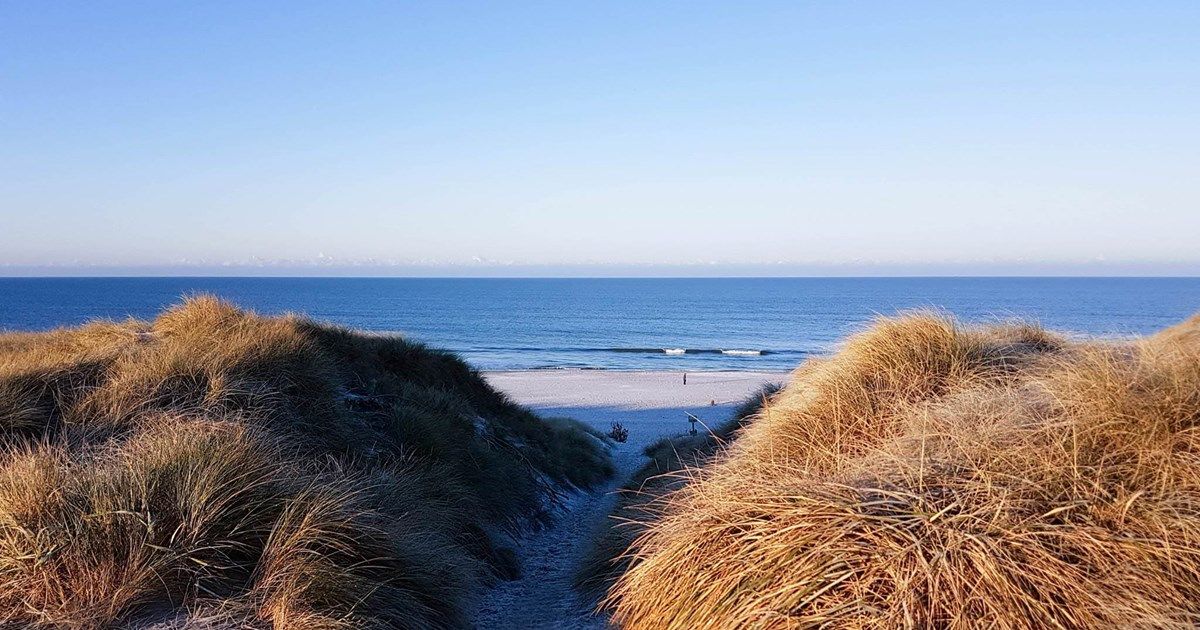
Today, Hvide Sande is still an active fishing community with a modern fishing harbor that supplies local restaurants with fresh seafood. Tourists also visit the area to enjoy the beautiful nature, the wide sandy beaches and the good opportunities for water sports such as surfing and sailing.
Annual events and festivals are organized that celebrate both the past and the present in Hvide Sande. Visitors can experience the maritime atmosphere, the local crafts and the friendly people who still cherish the town's history and traditions.